
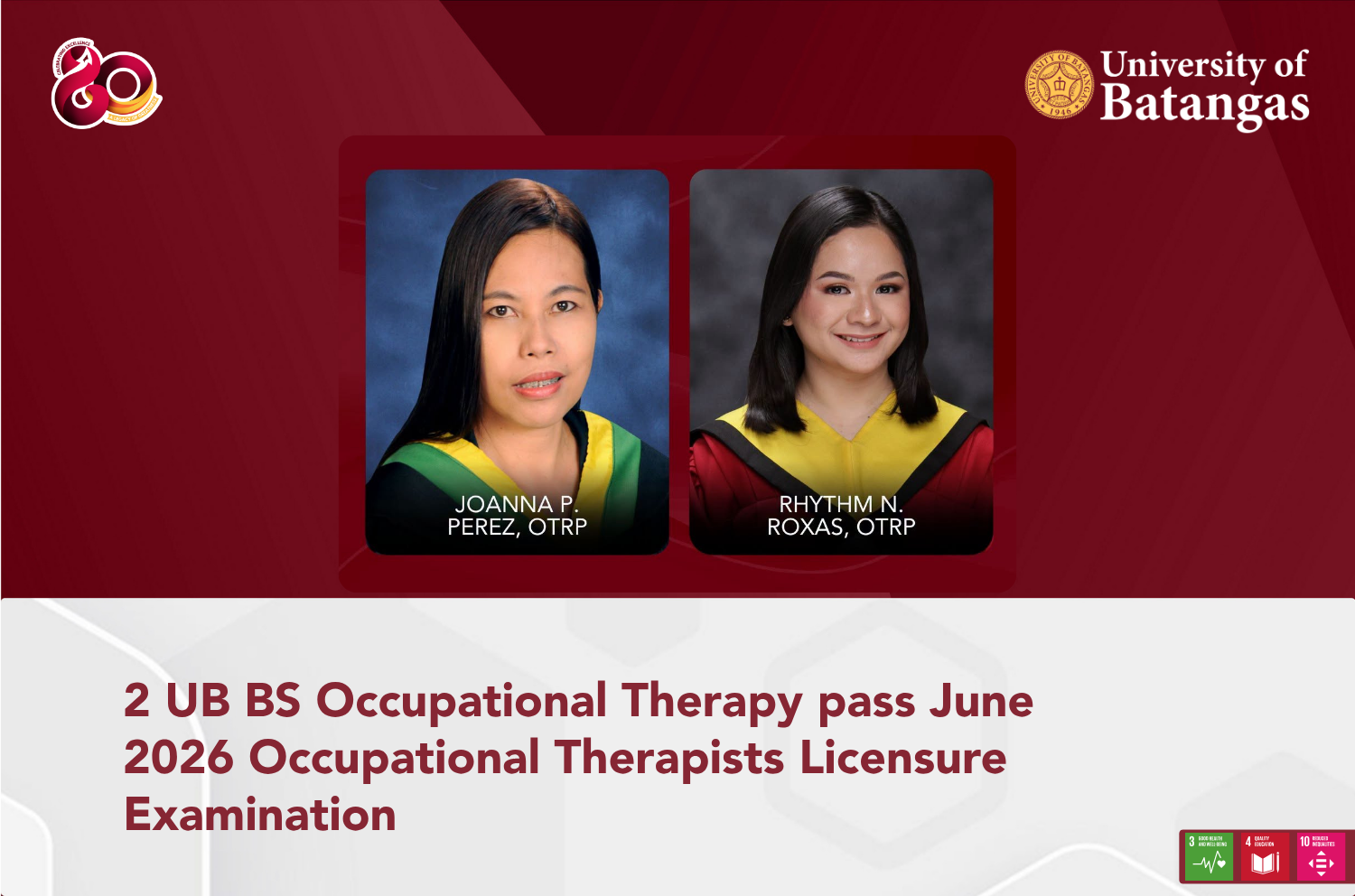
Two University of Batangas (UB) Bachelor of Science in Occupational Therapy (BSOT) under the College of Allied Medical Sciences (CAMS) officially secured their professional licenses following the release of the June 2026 Occupational Therapists Licensure Examination results on June 8, 2026.
The Professional Regulation Commission (PRC) administered the rigorous licensure examination, testing the candidates’ advanced competencies in human development, therapeutic modalities, and psychosocial dysfunction. The newly registered occupational therapists from the university include: Joanna P. Perez, OTRP and Rhythm N. Roxas, OTRP.
These board-certified professionals will immediately enter the regional healthcare workforce, bringing vital pediatric, geriatric, and physical rehabilitation expertise to hospitals, specialized clinics, and community centers. Their institutional success underscores the commitment of the CAMS faculty to maintain top-tier educational frameworks that align with national medical standards.
This professional board milestone directly advances the United Nations Sustainable Development Goals (SDGs) through the framework of SDG localization, translating international parameters into actionable local healthcare solutions:
The transition of these licensed occupational therapists into active clinical practice directly localizes SDG 3: Good Health and Well-Being, specifically advancing Target 3.c by increasing the recruitment, development, training, and retention of the health workforce in developing countries. By consistently graduating licensed medical practitioners, UB expands geographic access to specialized long-term rehabilitative care.
Furthermore, this institutional milestone furthers SDG 4: Quality Education, precisely matching Target 4.4 by demonstrating a verified increase in the number of technical and professional graduates who possess the specialized skills required for immediate, high-impact employment. Through occupational therapy’s unique focus on enabling disabled individuals to participate in daily activities and work, this milestone also indirectly supports SDG 10: Reduced Inequalities under Target 10.2, fostering the social, economic, and political inclusion of all people irrespective of age or disability status.